Harambe
Cincinnati Zoo incident, May 28, 2016
Try This Meme!
Swap your face into the Harambe meme and join the trend.
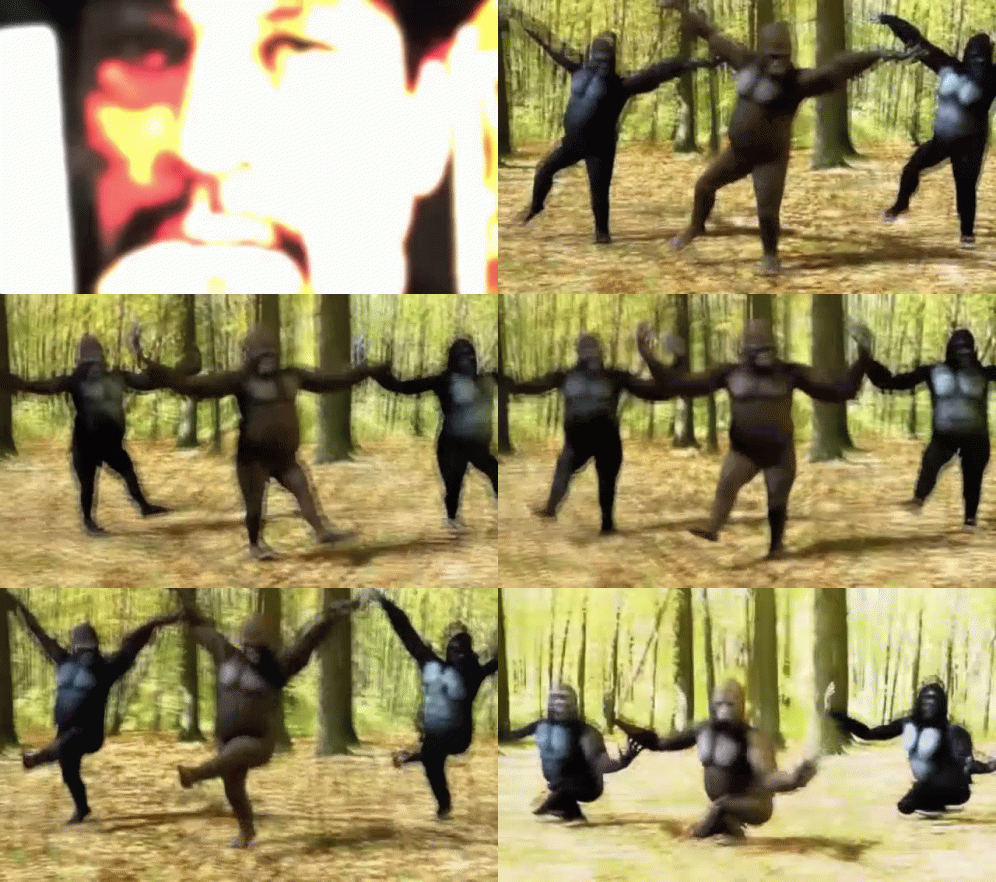
The Gorilla Who Became 2016's Biggest Meme
Harambe was a 17-year-old Western lowland silverback gorilla shot and killed at the Cincinnati Zoo on May 28, 2016, after a 3-year-old boy fell into his enclosure. Within weeks, his name became the single most referenced meme of the year — spawning a Change.org petition with 338,000 signatures, the viral slogan "dicks out for Harambe," write-in presidential votes, and a cultural moment that captured everything absurd and sincere about the internet in 2016.
But Harambe's meme legacy isn't just about a dead gorilla. It's about how the internet processes grief, how irony and sincerity blur into something entirely new, and how a single news cycle can become an inescapable part of an entire year's identity.
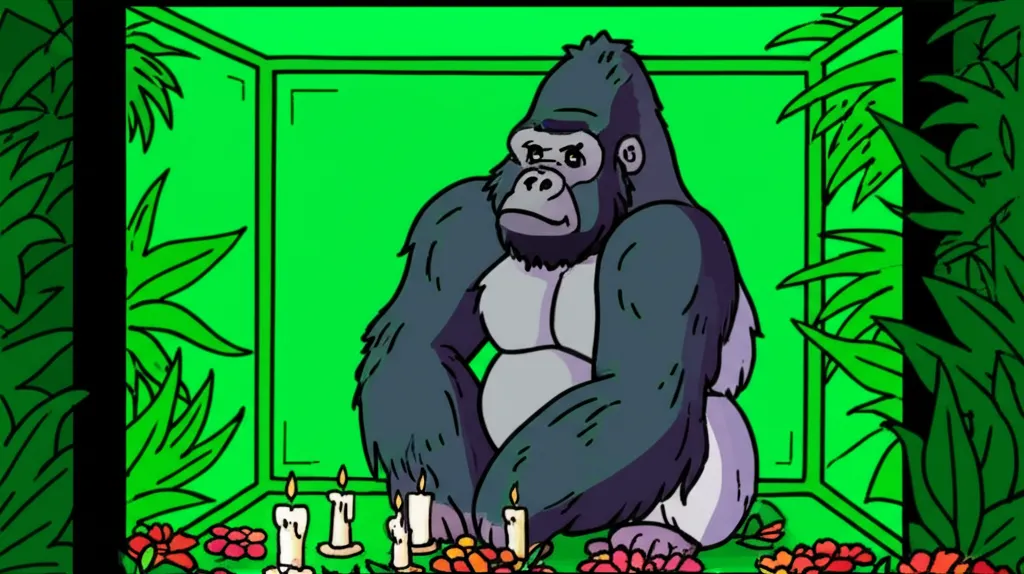
Before the Meme: Harambe's Real Life
Harambe was born on May 27, 1999, at the Gladys Porter Zoo in Brownsville, Texas. His name came from a local counselor, Dan Van Coppenolle, who won a zoo naming contest — he'd been inspired by Rita Marley's 1988 song "Harambe (Working Together for Freedom)." Harambee is a Swahili word meaning communal labor, a concept of pulling together.
His early life was marked by tragedy. In January 2002, when Harambe was just two, his mother Kayla, 11-month-old brother Makoko, and half-sister Uzuri died from chlorine gas poisoning after chlorine tablets were left too close to a space heater in the gorilla enclosure. Harambe survived but may have been injured.
In September 2014, the 15-year-old gorilla was transferred to the Cincinnati Zoo and Botanical Garden to learn adult gorilla behavior and join a new social group. He weighed 440 pounds and was, by all accounts, a healthy young silverback in his prime.
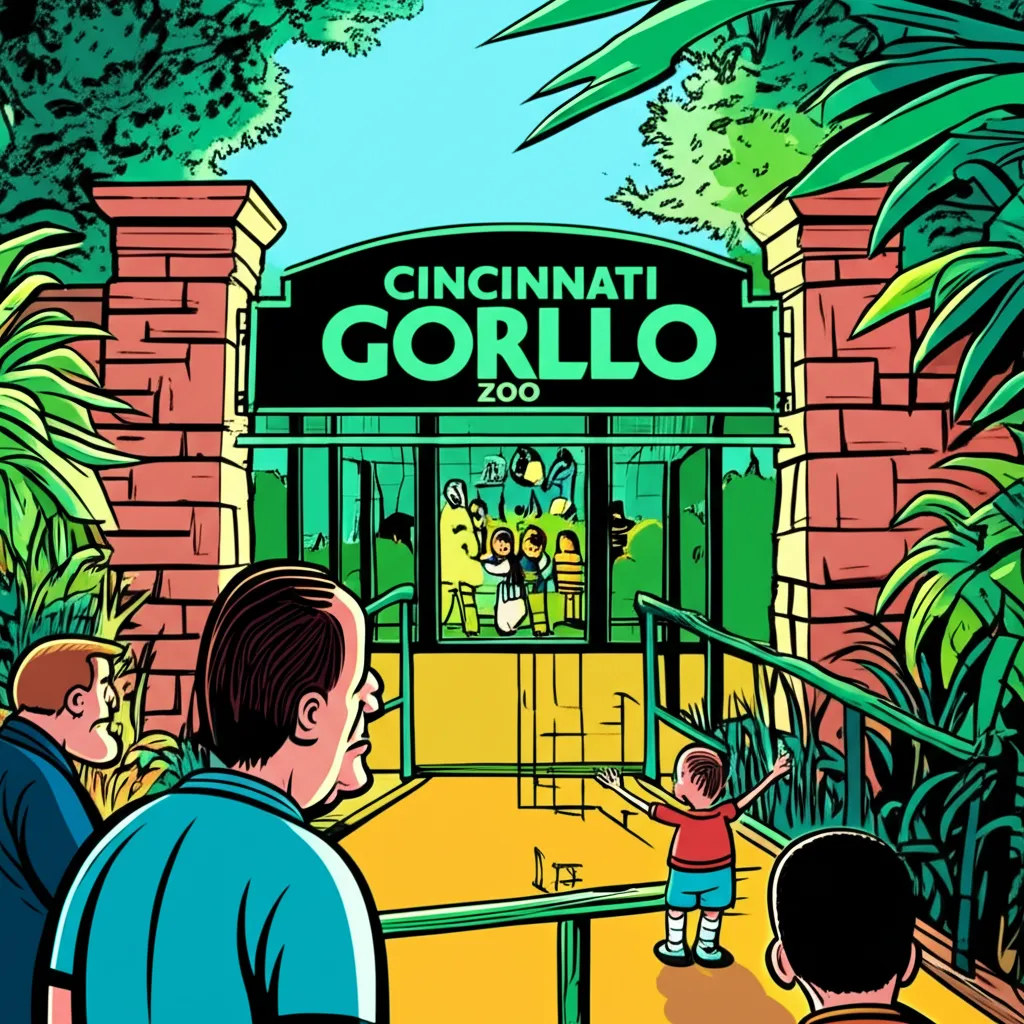
May 28, 2016: The Day That Broke the Internet
On the day after his 17th birthday, a 3-year-old boy visiting the zoo with his family climbed a 3-foot fence, crawled through 4 feet of bushes, and fell 15 feet into the moat of the Gorilla World enclosure. Zoo officials signaled for the three gorillas to return inside — two females obeyed. Harambe climbed down into the moat to investigate.
Over the next 10 minutes, Harambe became "increasingly agitated and disoriented" by the screaming crowd above. He dragged the boy through the water, occasionally propping him up or pushing him down. He exhibited "strutting" behavior — walking stiffly with extended limbs to appear larger. Zoo director Thane Maynard later described it bluntly: "The child was being dragged around... His head was banging on concrete."
Zoo officials made the call: a single rifle shot to the head. Tranquilizers were ruled out — zookeeper Jack Hanna noted a dart could take 5-10 minutes to work and would have further agitated the 440-pound silverback. The boy was rushed to Cincinnati Children's Hospital with non-life-threatening injuries.
A bystander's video hit YouTube the same day. It racked up 12.6 million views and 41,000 comments in 48 hours. The defining YouTube video of 2016 wasn't a music video or a vlog — it was footage of a gorilla being shot.
Phase One: Genuine Outrage (May–June 2016)
The initial response was sincere and furious. A post about the incident hit the front page of Reddit's r/news on May 29th, pulling 7,100+ upvotes and 6,200 comments. The hashtags #JusticeForHarambe and #RIPHarambe flooded Twitter and Facebook.
The "Justice for Harambe" Change.org petition — demanding the parents be held responsible — collected 338,000 signatures in 48 hours. The boy's mother, Michelle Gregg, became a target of online shaming. (Ohio prosecutor Joe Deters ultimately declined to file any charges on June 6th.)
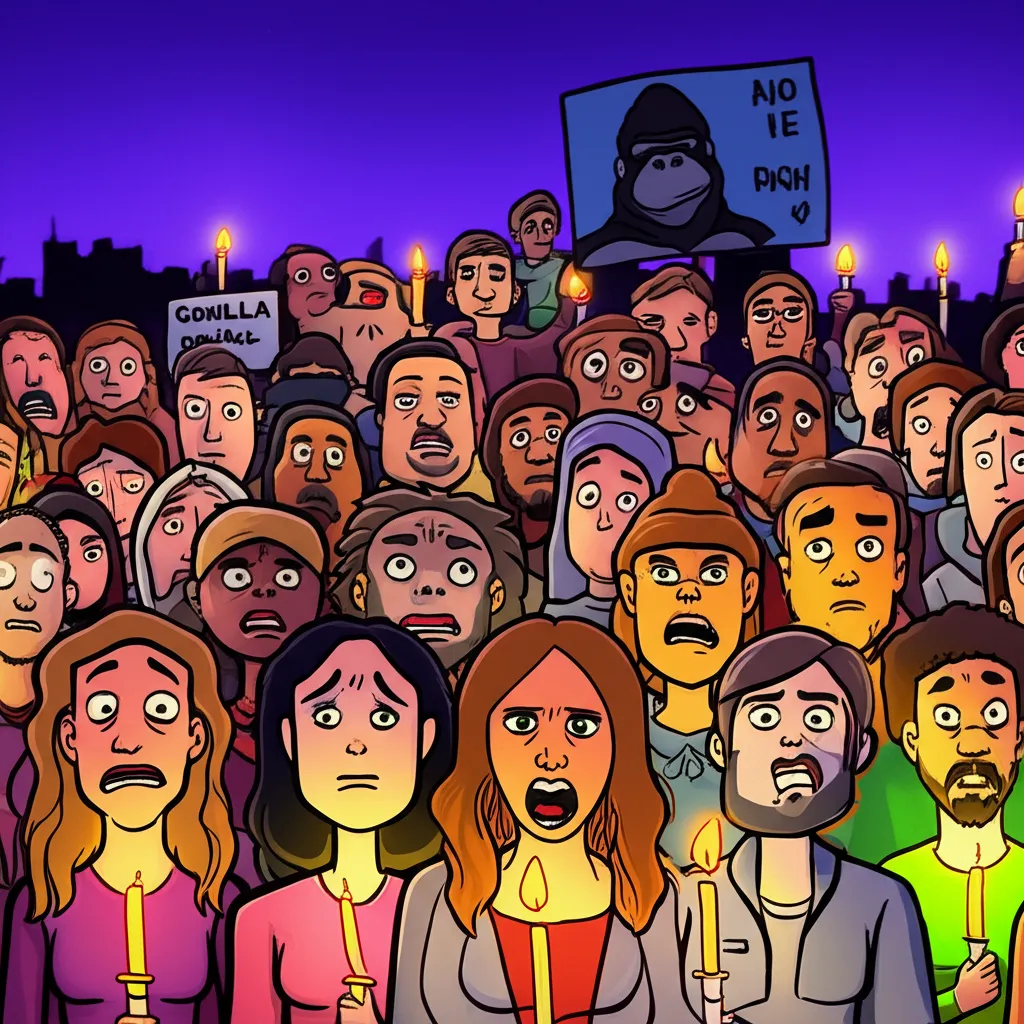
Candlelight vigils popped up in Cincinnati. Jane Goodall weighed in, saying it looked like Harambe was trying to protect the child, but concluded the zoo "had no choice." Celebrities from Ricky Gervais to Donald Trump commented on the story. It was everywhere — CNN, BBC, NBC, TIME — a genuine, wall-to-wall news event.
Phase Two: Ironic Ascension (July 2016)
This is where Harambe stopped being a news story and became a meme.
Weird Twitter started photoshopping Harambe alongside Prince, David Bowie, and Muhammad Ali in "celebrities we lost in 2016" tribute graphics. Song lyrics got rewritten. Blink-182's Mark Hoppus jumped in. The line between grief and satire dissolved completely.
Then came the phrase that defined it all. On July 2nd, Twitter user @sexualjumanji posted a selfie pointing a replica gun at the camera with: "We comin with them dicks out to avenge harambe!!!" On July 4th, comedian Brandon Wardell tweeted the distilled version: "dicks out for harambe."
Wardell posted a Vine of friends chanting it. Then another Vine — this time with actor Danny Trejo saying the phrase — that pulled 2.2 million loops in five days. The subreddit r/dicksoutforharambe launched. A Facebook event invited people to the White House to "show solidarity." The phrase became so ubiquitous that UMass Amherst resident assistants sent an official email calling Harambe jokes a "micro-aggression" — which itself went viral and was widely mocked.
Phase Three: Harambe vs. The Establishment
The meme started clashing with real institutions. On July 10th, Ohio teen Max Brinton pranked Google Maps into renaming his school's street from Shankland Road to "Harambe Drive." Google actually updated the map. BuzzFeed covered it.
On August 20th, a hacker took over Cincinnati Zoo director Thane Maynard's Twitter account, filling his feed with Harambe hashtags. Two days later, Maynard issued a statement: "We are not amused by the memes, petitions and signs about Harambe. Our zoo family is still healing." The statement hit r/nottheonion and spread like wildfire — the zoo telling the internet to stop only made the internet go harder.
Phase Four: The 2016 Election and Beyond
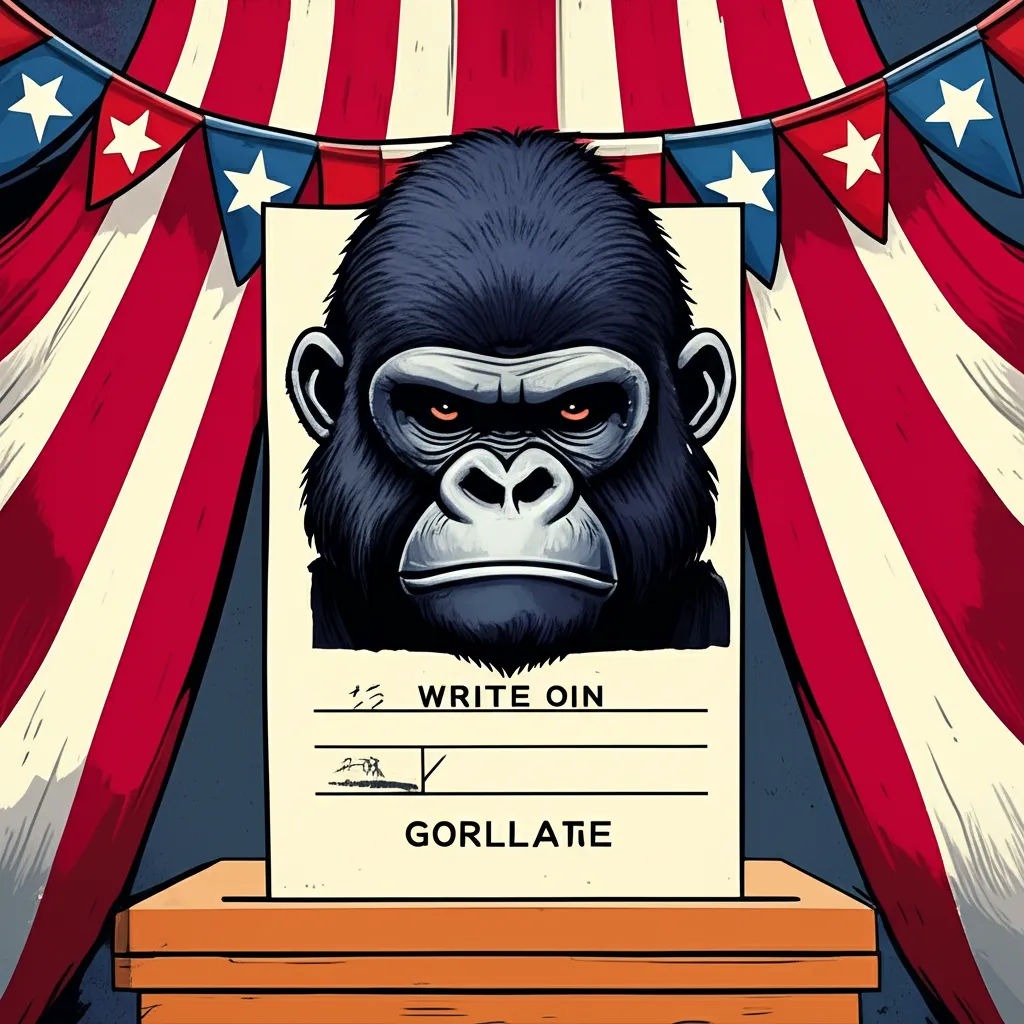
In what might be the most perfectly 2016 thing possible, Harambe became a presidential candidate. Write-in votes for the dead gorilla became a genuine protest movement during the Trump vs. Clinton election. An August 2016 poll showed Harambe polling at 5% — tied with Green Party candidate Jill Stein. Whether this was a commentary on the candidates, on democracy itself, or just peak internet nihilism, it cemented Harambe as the cultural mascot of 2016.
Why Harambe Matters (Seriously)
The Harambe meme is a case study in how the internet processes collective emotion. The grief was real — people genuinely mourned a gorilla they'd never met, killed in a situation where nobody was clearly "the villain." The zoo was protecting a child. The parents had a momentary lapse. The gorilla was being a gorilla.
That ambiguity is exactly why Harambe became a meme instead of just a news story. There was no satisfying resolution, so the internet created one: absurdist mourning that escalated until the grief, the irony, and the jokes all collapsed into each other. Harambe memes were simultaneously sincere tributes, sarcastic commentary on performative grief, and just... really funny.
The LA Times called Harambe "the meme we couldn't escape in 2016." They were right. But what made it inescapable wasn't just virality — it was the fact that it touched on real questions about zoos, parenting, internet outrage, and the weird way we collectively decide what matters. A decade later, "Harambe" remains internet shorthand for the exact moment when meme culture proved it could swallow absolutely anything.
🦍 Become Harambe
Pay your respects the internet way — swap your face into a classic Harambe GIF on MEEMES. Whether it's the dancing Harambe or a memorial tribute, make your own version of 2016's most iconic meme in seconds.
Frequently Asked Questions
Who was Harambe the gorilla?
Harambe was a 17-year-old Western lowland silverback gorilla living at the Cincinnati Zoo and Botanical Garden. Born May 27, 1999 at the Gladys Porter Zoo in Brownsville, Texas, he was named after a Rita Marley song — "Harambe (Working Together for Freedom)." He was transferred to Cincinnati in September 2014.
What happened to Harambe at the Cincinnati Zoo?
On May 28, 2016, a 3-year-old boy climbed a 3-foot fence, crawled through bushes, and fell 15 feet into the gorilla enclosure moat. Harambe grabbed the child and dragged him through the water for about 10 minutes. Zoo officials shot Harambe with a rifle to protect the boy, who survived with non-life-threatening injuries.
Why did Harambe become a meme?
The combination of genuine public grief, outrage at the zoo's decision, and the absurdity of internet culture turned Harambe into 2016's defining meme. It evolved from sincere mourning (#JusticeForHarambe, a 338,000-signature Change.org petition) into increasingly ironic tributes, culminating in the viral phrase "dicks out for Harambe" coined in July 2016.
What does "dicks out for Harambe" mean?
The phrase originated on July 2, 2016 from Twitter user @sexualjumanji and was popularized by comedian Brandon Wardell on July 4th. It started as an absurd, ironic rallying cry of solidarity for Harambe and became one of the most recognizable internet slogans of 2016. It's a textbook example of how internet grief cycles from sincerity to irony.
Did people actually vote for Harambe in the 2016 election?
Yes. During the 2016 U.S. presidential election, many people wrote in "Harambe" on their ballots as a protest vote. One August 2016 poll showed Harambe polling at 5% — tied with Green Party candidate Jill Stein. The write-in campaign became yet another layer of the meme's cultural reach.
Can I face swap myself into a Harambe meme?
Absolutely. MEEMES makes it easy to swap your face into Harambe GIFs and meme templates. Whether you want to recreate the dancing Harambe or pay your own ironic tribute, just upload a selfie and pick a Harambe template.