Stonks
Facebook page Special Meme Fresh, June 5, 2017
Try This Meme!
Swap your face into the Stonks meme and join the trend.

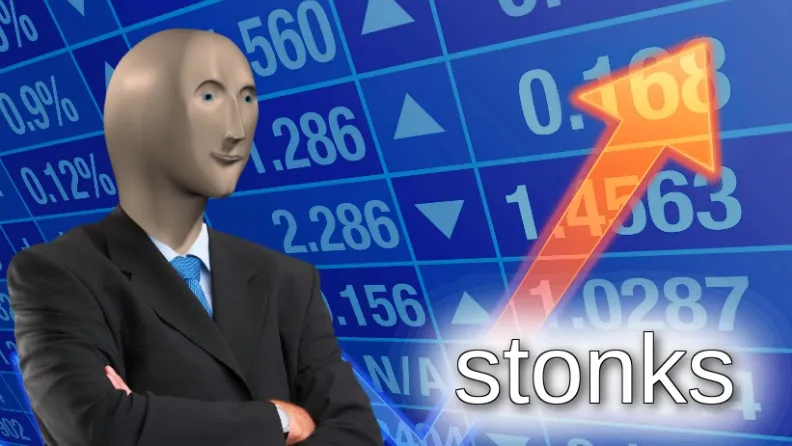
The Stonks meme — featuring a smooth, featureless 3D-rendered head called Meme Man standing confidently in front of a rising stock chart — was first posted on June 5, 2017 by the Facebook page Special Meme Fresh. The image paired the surreal character with the intentionally misspelled caption "STONKS" and quickly became the internet's go-to reaction for hilariously misguided financial decisions. It gained over 3,600 likes on Facebook, spawned an entire universe of spin-off memes, and eventually became the unofficial mascot of the 2021 GameStop trading frenzy.
The Birth of Meme Man: Surreal Meme Royalty
Before Stonks existed, there was Meme Man. This deliberately crude 3D-rendered bald head — smooth skin, no ears, vacant expression — emerged from the surreal meme community around 2014. The character was created as part of a wave of intentionally low-quality, dreamlike meme content that rejected the polished formats of mainstream memes. Think of it as meme dadaism: the humor comes from the discomfort of something being just slightly wrong.
Meme Man appeared in various surreal contexts before 2017, but he didn't have a breakout moment. He was a character actor in search of a defining role. Stonks gave him that role — and turned him into one of the most recognizable meme characters of the late 2010s.
June 5, 2017: Special Meme Fresh Drops the Original
The Facebook page Special Meme Fresh — a hub for off-beat, surreal meme content — posted the image that started it all. The composition was simple but effective: Meme Man in a suit, standing in front of a stock photo of a stock market display (yes, a stock photo of stocks), with the single word "STONKS" in bold text.
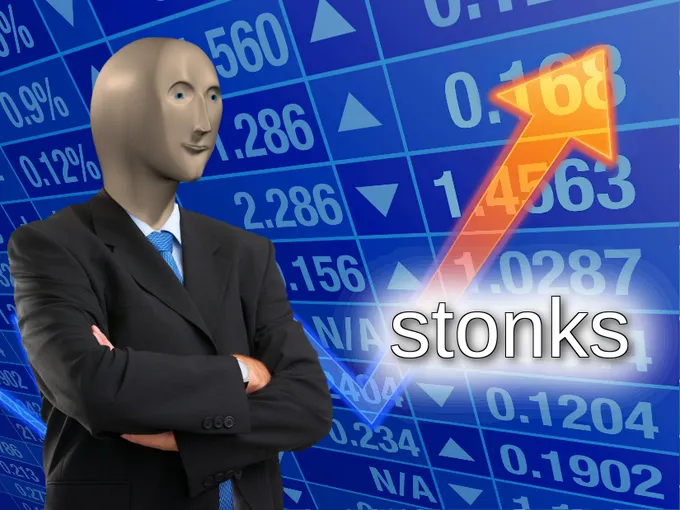
The genius is in the layers. The misspelling signals that this isn't real financial advice — it's someone who doesn't even know how to spell "stocks" cosplaying as a Wall Street trader. The 3D render looks like it was made in 2004. The stock chart is going up, but the whole image radiates the energy of someone who just accidentally made money on a meme coin and thinks they're Warren Buffett.
The post gained over 3,600 likes and reactions on Facebook. Within weeks, it started appearing on Reddit — first on /r/Ooer (a deliberately chaotic subreddit), where it earned 400+ upvotes on July 3, 2017, and then gradually across broader meme subreddits.
2018–2019: The Slow Burn Ignites
For about a year, Stonks was a mid-tier meme — known, appreciated, but not dominant. That changed in early 2019 when two things happened simultaneously. First, the format started being used as a genuine reaction image in financial humor contexts. People weren't just sharing the original image — they were making new versions, applying "Stonks" to any situation where someone made a questionable decision that somehow worked out.
In February 2018, YouTuber HallucinatoryMenu posted a clip of the word "stonks" being read with heavy reverb, racking up over 19,000 views and adding an audio dimension to the meme. By March 2018, edited versions were appearing in Imgur photo dumps pulling over 131,000 views. The meme was building momentum.
Second — and this is what made Stonks truly special — the character spawned an entire extended universe of deliberately misspelled profession memes. Each one used the same Meme Man template but in a different context:
- Shef — Meme Man in a chef's hat, caption "Shef" (used when someone makes a terrible meal and acts proud)
- Helth — Meme Man with a stethoscope, caption "Helth" (used for terrible health decisions)
- Tehc — Meme Man at a computer, caption "Tehc" (used for terrible tech solutions)
- Smort — Meme Man looking wise, caption "Smort" (for dumb decisions framed as genius)
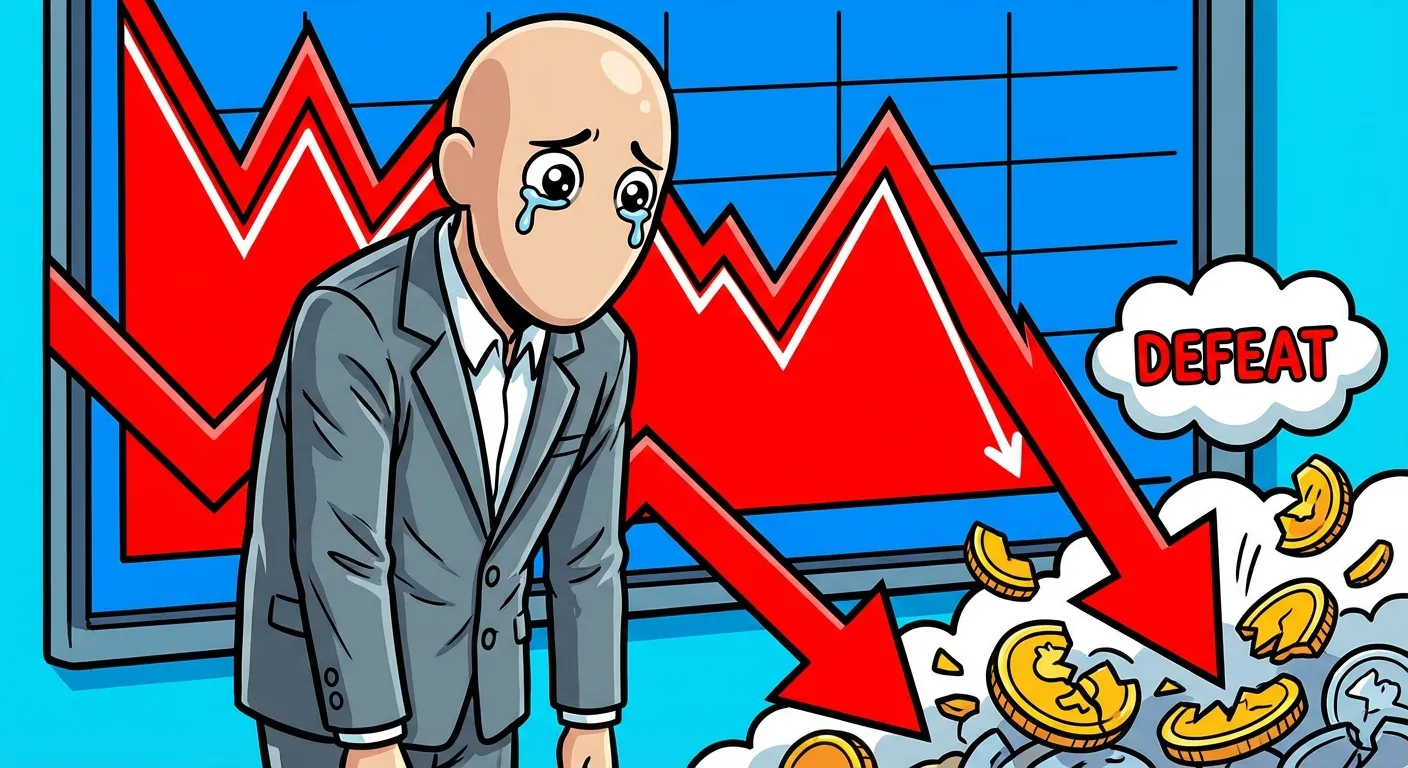
- Not Stonks — The direct inverse: a crashing chart with "Not Stonks" for genuine financial disasters
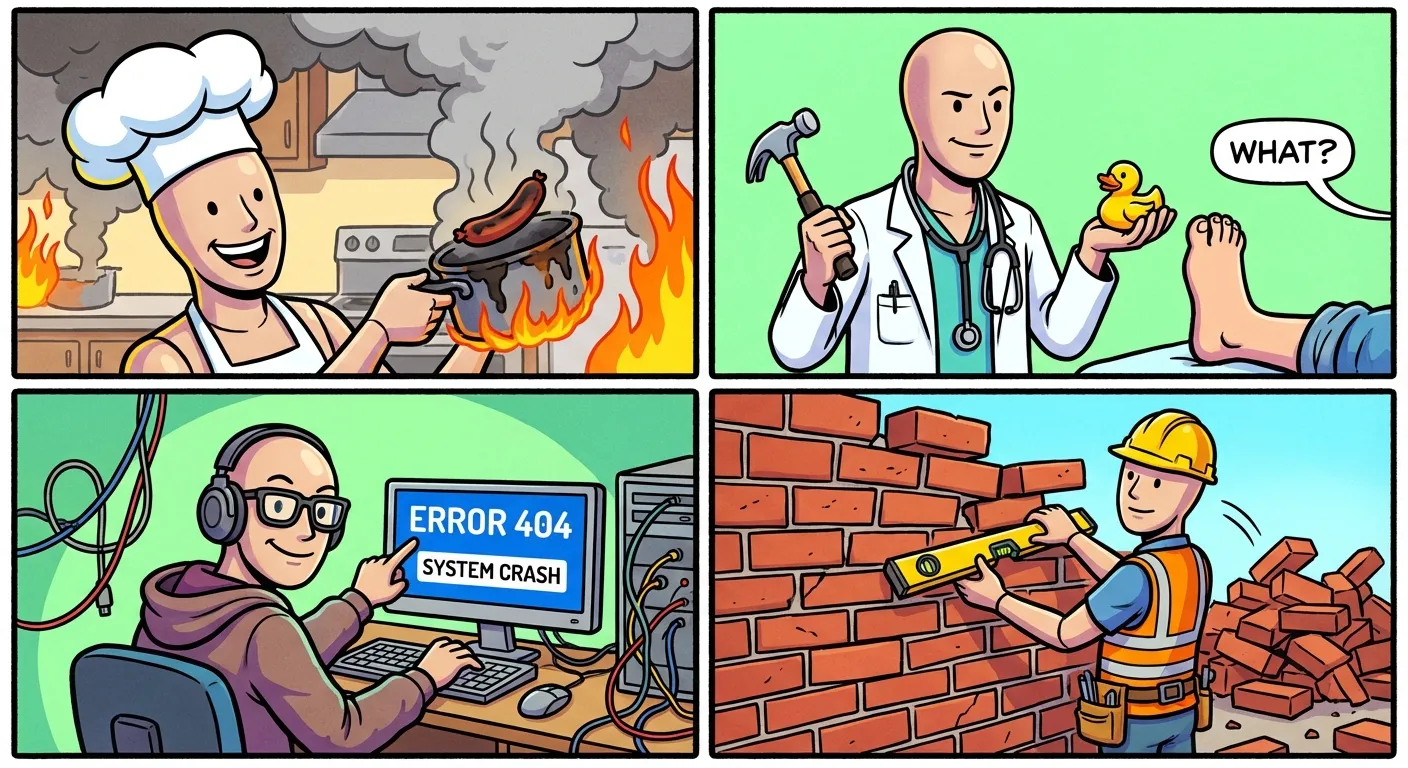
This spin-off ecosystem is what separated Stonks from a one-hit wonder. Most memes are a single image with a single use case. Stonks created a format — a modular system where anyone could generate new content by combining Meme Man + misspelled profession + ironic confidence. That's rare and it's why the meme had such extraordinary longevity.
January 2021: GameStop and the Meme Stock Revolution
If 2019 was Stonks' first peak, January 2021 was its apotheosis. When the r/WallStreetBets subreddit orchestrated a short squeeze on GameStop stock — driving the price from $17 to $483 in two weeks — the word "stonks" went from meme vocabulary to near-mainstream usage. CNBC anchors were saying it. Bloomberg put it in headlines. Your uncle who just downloaded Robinhood was texting it to the family group chat.
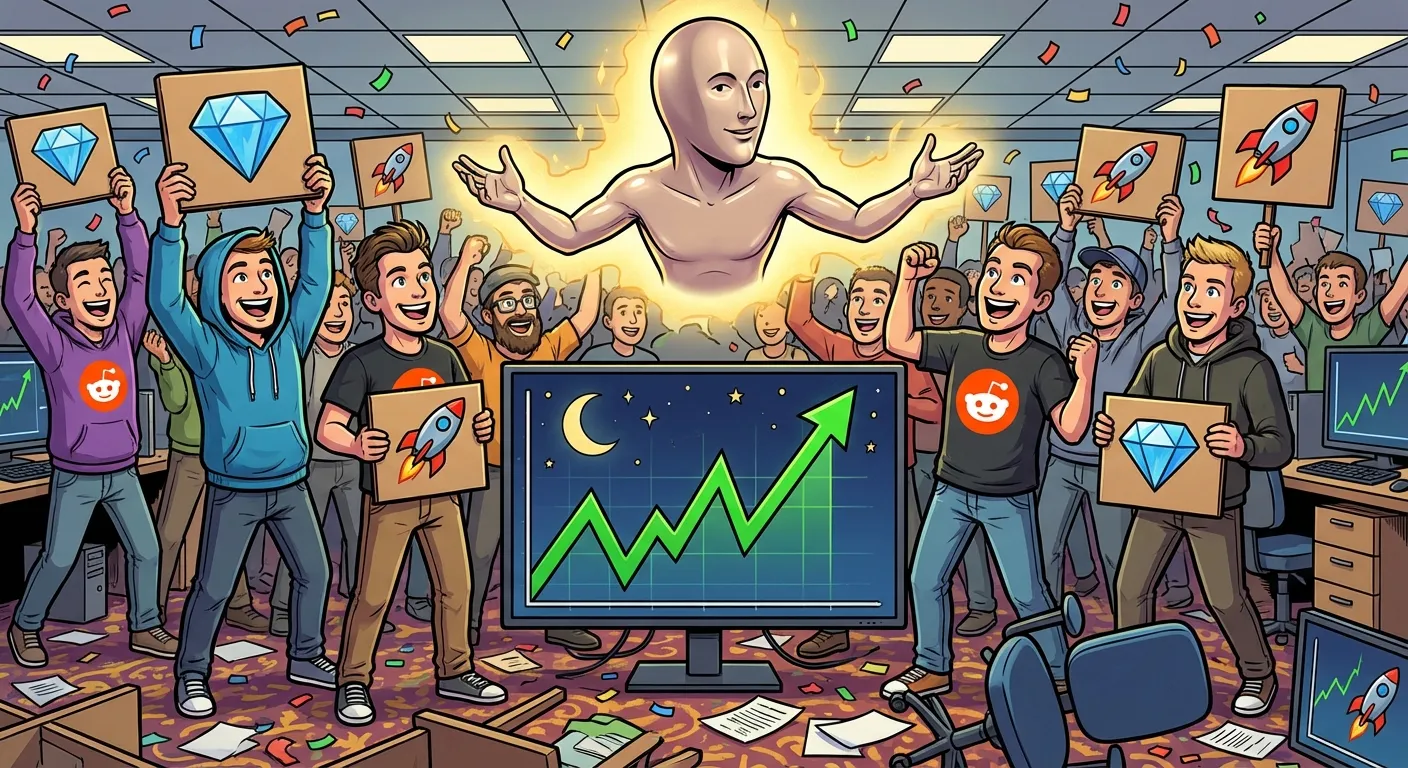
The GameStop saga was perfect for Stonks because the entire event was, in essence, a real-world version of the meme. Retail investors with no formal financial training were making wildly risky bets — and, at least for a while, winning. They were doing stonks, in real life, with real money. The meme wasn't a metaphor anymore; it was a mission statement.
After GameStop, the term "meme stock" entered the financial lexicon permanently. AMC, BlackBerry, Bed Bath & Beyond — any stock driven more by Reddit enthusiasm than fundamentals became a "stonk." The meme had escaped the internet and changed how people talked about actual markets.
Why Stonks Works: The Psychology of Confident Incompetence
At its core, Stonks isn't really about finance. It's about the universal human experience of doing something you have no business doing — and feeling great about it. We've all been there. You parallel park on the first try and feel like a Formula 1 driver. You fix a bug by randomly changing code and think you're a senior engineer. You microwave last night's leftovers and call it "meal prep."
The featureless face is crucial to this. Meme Man has no identity, no demographic, no personality. He's a blank vessel for anyone's self-delusion. The smooth, expressionless head somehow radiates supreme confidence despite having no features that could possibly convey emotion. It's the Dunning-Kruger effect rendered in low-poly 3D.
The misspelling matters too. "Stonks" isn't a typo — it's a declaration. It says "I know this isn't how you spell stocks, and I don't care, because I'm built different." The deliberate error creates complicity between the meme and its audience. Everyone's in on the joke. You're not laughing at someone who can't spell; you're celebrating the absurdity of pretending you know what you're doing.
The "I Didn't Mean To Send That" Format
One of Stonks' most creative evolutions was the "I Didn't Mean To Send That" text message format, which went viral in June 2019. The setup: someone sends a series of apologetic texts to their significant other ("I'm sorry," "please forgive me," "I didn't mean it"), and then "accidentally" sends the Stonks meme. The punchline is the absurd tonal shift — from emotional vulnerability to bald 3D man celebrating stocks.
Redditor Renji posted the original version to r/GoodFakeTexts on June 3, 2019, earning over 5,000 upvotes. The format spawned a wave of TikTok and Instagram videos shot in first-person POV, showing the phone screen as the texts go out. It was a clever reinvention that proved the meme had life beyond its original use case.
Frequently Asked Questions
Where did the Stonks meme come from?
The Stonks meme was first posted on June 5, 2017 by the Facebook page Special Meme Fresh. It showed the surreal character Meme Man — a smooth, featureless 3D-rendered head — in a suit in front of a stock chart with the caption "STONKS." It became the internet's go-to image for ironic financial confidence.
Who is the bald head in the Stonks meme?
That's Meme Man, a deliberately low-quality 3D-rendered character from the surreal meme community. He first appeared around 2014 and has no specific creator or identity — he's intentionally blank and featureless, which is what makes him such a versatile meme template.
What does Stonks mean?
Stonks is a deliberate misspelling of "stocks." It's used to mock overconfident, bad financial decisions — or to celebrate absurd wins. Since 2021, the r/WallStreetBets community has adopted it as a semi-serious term for meme stocks like GameStop and AMC.
What are the Stonks spin-off memes?
Stonks spawned a whole family of misspelled profession memes in 2019: Shef (chef), Helth (health), Tehc (tech), Smort (smart), and Not Stonks (the inverse). Each uses Meme Man in a different costume with the same energy of confident incompetence.
Can I face-swap into the Stonks meme?
Yes — it's one of the easiest and funniest swaps on MEEMES. Meme Man's featureless head is a blank canvas, so your face replaces his smooth dome perfectly. Become the confident investor who just bought the dip on a coin that doesn't exist.
📈 Your Turn to Stonk
MEEMES lets you swap your face onto the Stonks meme in seconds. Become Meme Man. Radiate unearned financial confidence. Send it to your group chat after buying literally anything. The market is fake. The stonks are eternal. Make it yours.
Frequently Asked Questions
Where did the Stonks meme come from?
The Stonks meme was first posted on June 5, 2017 by the Facebook page Special Meme Fresh. The image showed the surreal character Meme Man — a smooth, featureless 3D-rendered head — standing in a suit in front of a stock market chart with the caption "STONKS." It became a reaction image for hilariously bad financial decisions.
Who is Meme Man in the Stonks meme?
Meme Man is a deliberately low-quality 3D-rendered bald head with a smooth, featureless face. He originated in surreal meme communities around 2014 and became the mascot of intentionally absurd humor. His blank expression makes him perfect for the deadpan confidence the Stonks meme conveys.
What does Stonks mean?
Stonks is an intentional misspelling of "stocks," used to mock poor or absurd financial decisions made with unearned confidence. If someone buys $500 worth of lottery tickets and calls it "investing," that's stonks. The term was later adopted by the r/WallStreetBets community during the 2021 GameStop short squeeze.
When did Stonks become popular?
The original image went moderately viral in mid-2017, but the meme truly exploded in mid-2019 when it spawned an entire ecosystem of spin-offs like Shef, Helth, and Tehc. It got a massive second wave in January 2021 during the GameStop/WallStreetBets saga.
What is Not Stonks?
Not Stonks is the inverse of the Stonks meme — same Meme Man, same stock chart, but the chart is crashing and the caption reads "Not Stonks." It's used when someone makes a genuinely terrible financial decision with no silver lining, or when the stock market tanks.
Can I face-swap into the Stonks meme?
Absolutely — and it's one of the easiest swaps on MEEMES. Meme Man's smooth, featureless head is the perfect canvas for a face swap. Your face replaces his blank expression, making it look like YOU are the one making questionable financial choices.