Hide the Pain Harold
DreamsTime stock photography, identified on Facepunch forums in 2011
Try This Meme!
Swap your face into the Hide the Pain Harold meme and join the trend.

Hide the Pain Harold is András Arató, a retired Hungarian electrical engineer whose stock photos became one of the internet's most enduring memes. His signature expression — a smile that says "everything is fine" while his eyes scream "nothing is fine" — has been the internet's go-to reaction for suppressed suffering since 2011. Here's the full, surprisingly wholesome story.
From Vacation Photo to Stock Photo Empire
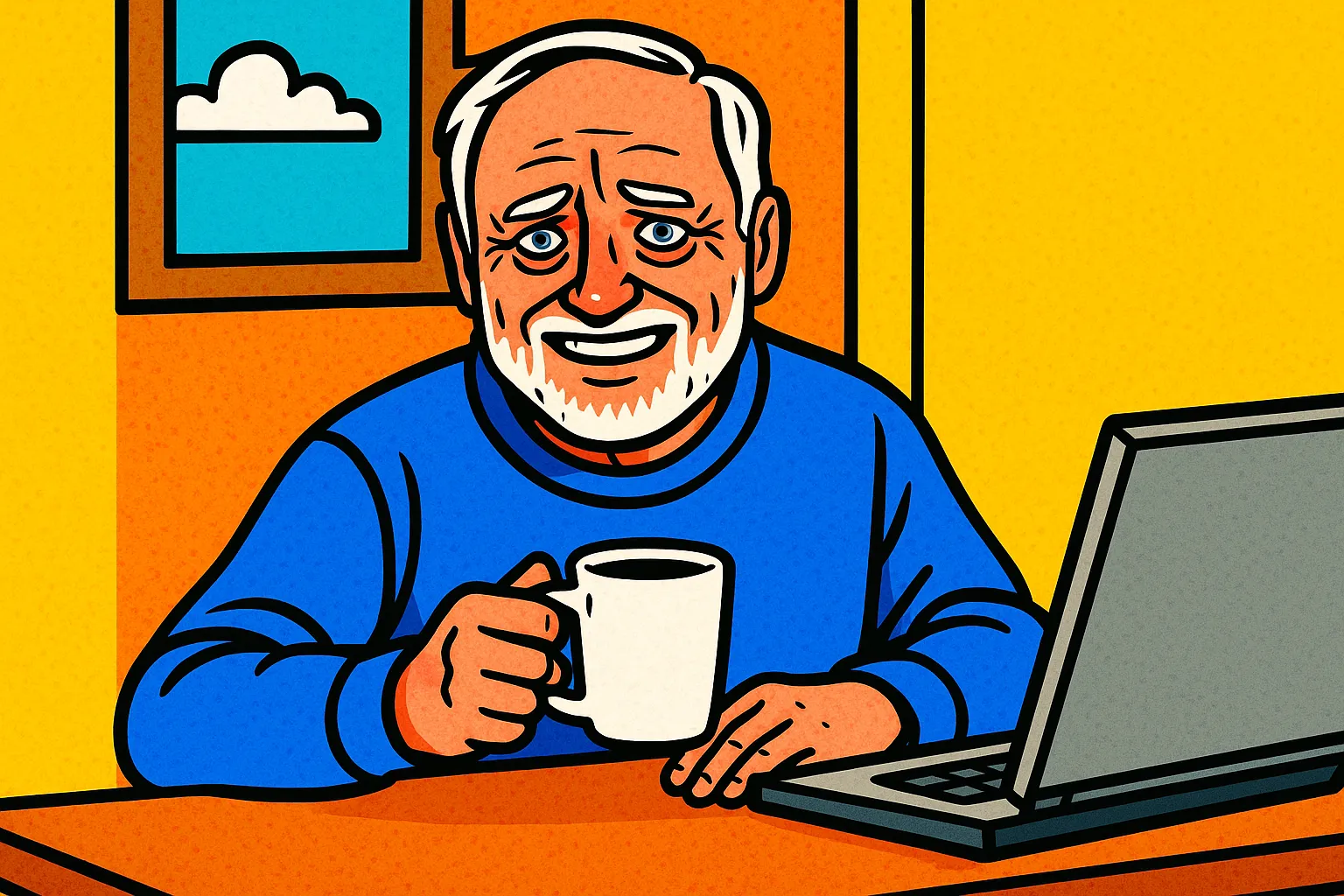
The origin story of Hide the Pain Harold reads like the world's most unlikely career change. András Arató was a retired electrical engineer living in Kőszeg, Hungary — a small town near the Austrian border. His career was in lighting engineering, about as far from internet fame as you can get.
Everything changed because of a vacation photo. While on holiday in Turkey, Arató had his picture taken. He uploaded it to Facebook (as one does), and a professional photographer noticed something in his look — that perfectly imperfect smile. The photographer reached out and invited Arató to a trial stock photo shoot.
Both photographer and model were happy with the results. They continued working together, eventually producing what Arató later described as "a couple hundred" stock photographs. These were uploaded to sites like DreamsTime, where they were meant to be used in advertisements, brochures, and corporate presentations. You know, normal stock photo stuff. Smiling at laptops. Giving thumbs up. Looking vaguely content at a dinner table.
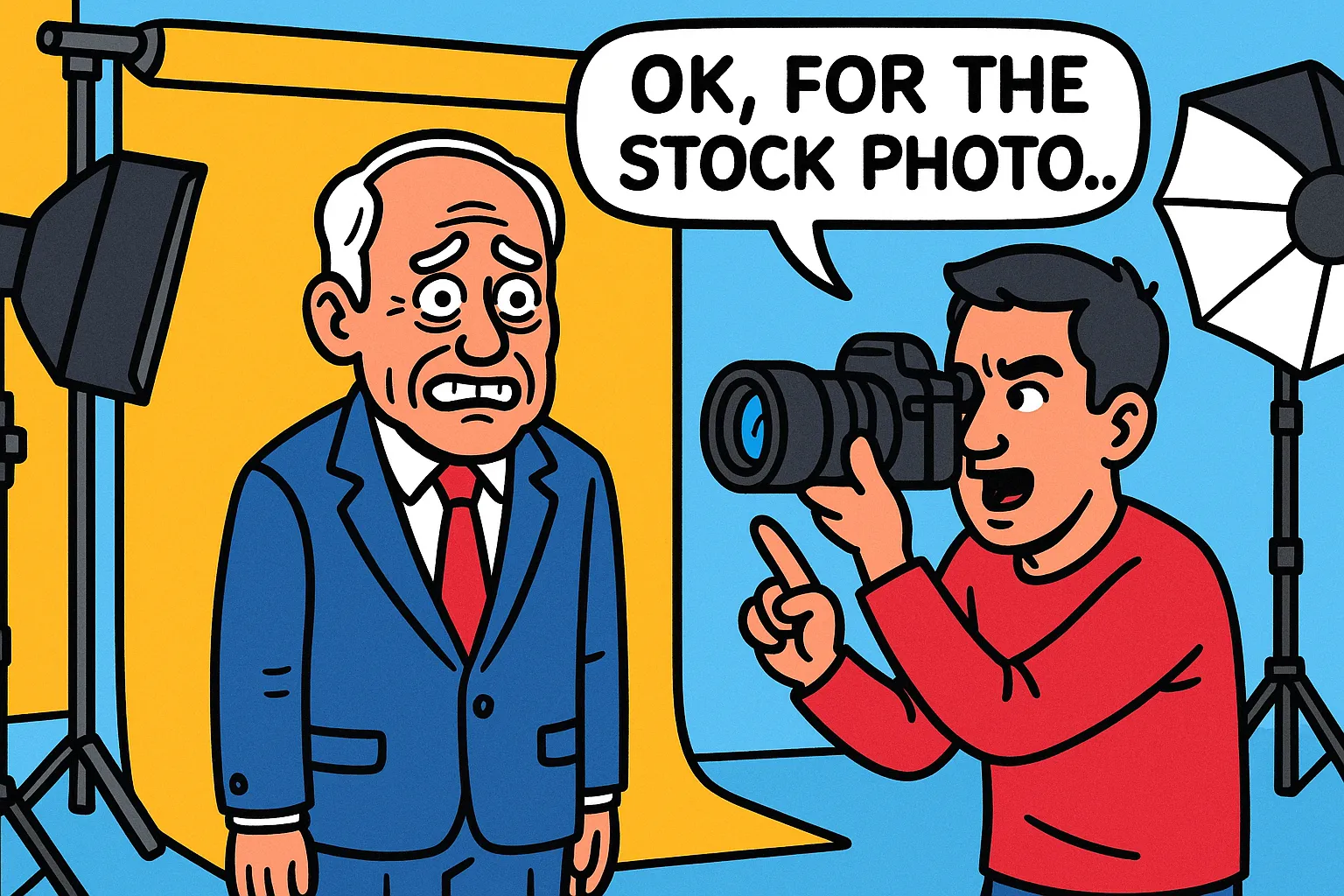
The thing is, Arató had that face. In nearly every photo, his smile looked just slightly... off. Not bad. Not creepy. Just like a man who was contractually obligated to be happy. His mouth would cooperate, but his eyes? His eyes told a different story entirely. They said: "I have seen things. I have a mortgage. My knee hurts. But sure, I'll smile for the camera."
The Internet Finds Harold (2011-2014)
On September 13, 2011, a user named Greenen72 on the Facepunch forums posted a collection of stock photos featuring our man. The images still had DreamsTime watermarks on them. The internet looked at this older gentleman's expression and collectively thought: "This man is hiding pain."
By October 2011, a Facebook page for "Hide the Pain Harold" had been created. But the real explosion came in 2014. On May 5th, 4chan's /b/ board dedicated an entire thread to Harold, crafting an elaborate fictional backstory about an unhappy old man forced to smile through stock photo sessions. It was dark, funny, and weirdly poetic — classic /b/.
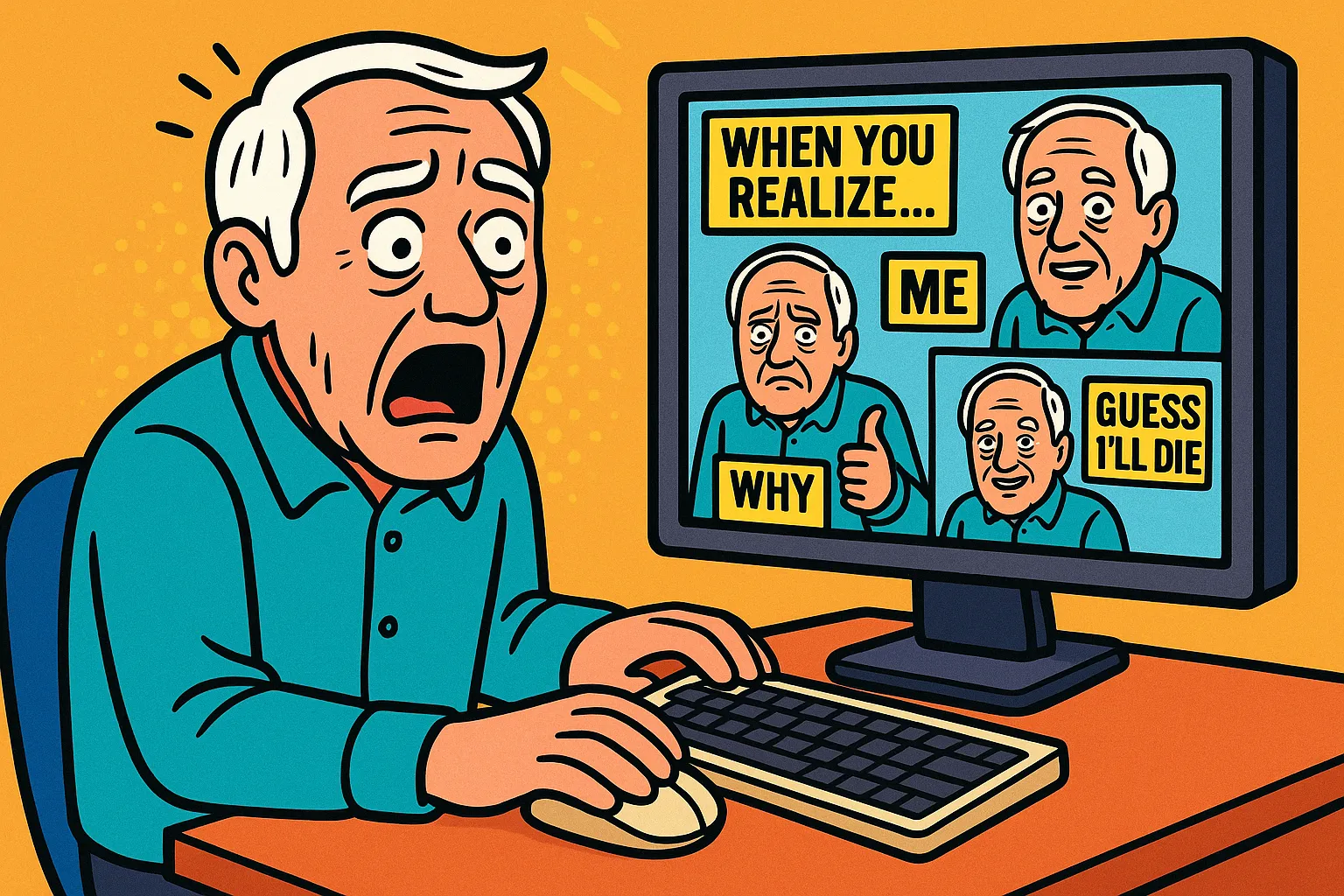
Then on September 7, 2014, Imgur user "someshitbag" (incredible username) compiled the best quotes from the 4chan thread into a gallery post titled "Hide-the-pain-harold." It racked up over 880,000 views in three weeks. A YouTube narration followed. The /r/youdontsurf subreddit — a community dedicated to captioning stock photos — adopted Harold as their unofficial mascot.
Harold also gained an alternate identity: some corners of the internet knew him as "Maurice", with a dedicated Facebook page under that name gathering over 10,000 likes. But "Harold" stuck as the canonical name — probably because it just sounds like the name of a man who is hiding pain.
András Arató Reveals Himself
For years, nobody knew who Harold actually was. He was just... Harold. A stock photo ghost haunting the internet with his pained smile. That changed on March 3, 2016, when a man named András Arató posted on a VK (Russian social network) group called "pain_harold," identifying himself as the real Harold.
Two days later, Redditors confirmed it. Footage surfaced of Arató appearing on a Hungarian TV game show. The man behind the meme was real, he was Hungarian, he was a retired electrical engineer, and he was... actually a pretty cheerful guy? The internet had spent five years projecting existential dread onto a man who was, by most accounts, living his best retired life.
From "No Solution" to Full Embrace
Arató has been refreshingly honest about his initial reaction to becoming a meme. When he first discovered his stock photos being used in memes — often with crude or sexual humor — he was understandably uncomfortable. He considered legal action.
But as he explained in his 2018 TEDx talk in Kyiv, he eventually realized there was "no solution — only a temporary solution." You can't un-meme yourself. The internet had decided András Arató was Hide the Pain Harold, and that was that.
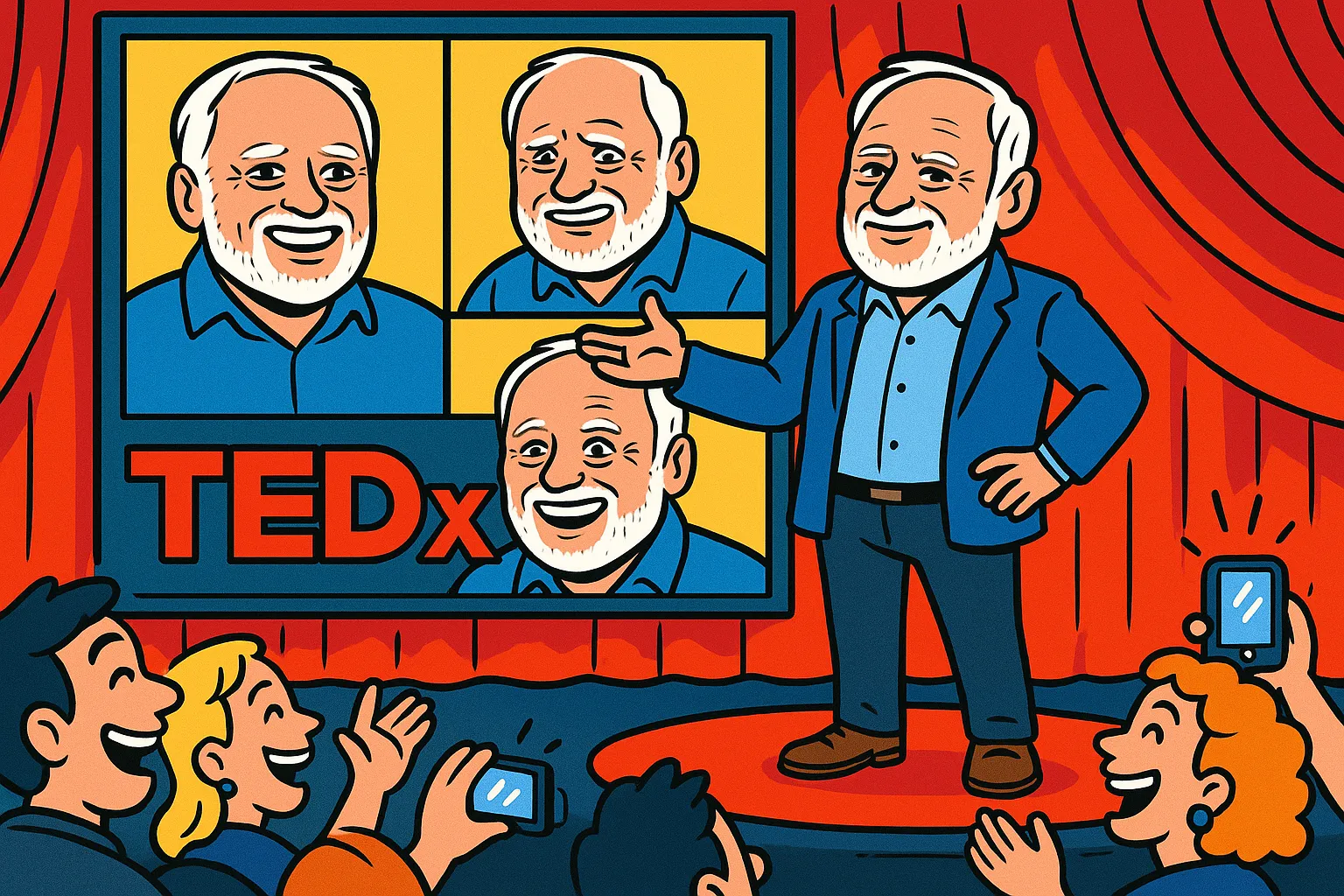
So he leaned in. He created a homepage. He started meeting fans. In March 2018, he traveled to Manchester, England to watch a football match, and Instagram photos of him posing with fans at a bar went viral — over 16,000 likes on a single post. The caption? "So my friend just met Harold tonight. Don't let your memes be dreams."
His TEDx talk, uploaded to YouTube in June 2019, pulled in over 580,000 views in just three days. In it, he tells the full story with genuine warmth and humor — a man who could have been bitter about losing control of his image, instead choosing to embrace one of the weirdest things that can happen to a person in the 21st century.

Why Harold's Face Works So Well
There's a reason Hide the Pain Harold has outlasted thousands of other memes. His expression taps into something deeply, universally human: the gap between how we present ourselves and how we actually feel.
We've all been Harold. At work when someone asks "how was your weekend?" and you say "great!" even though you spent it crying over your ex's Instagram stories. At family dinners when your aunt asks about your career. During Zoom calls when your boss says "exciting news about Q3 targets." Harold is all of us, all the time.
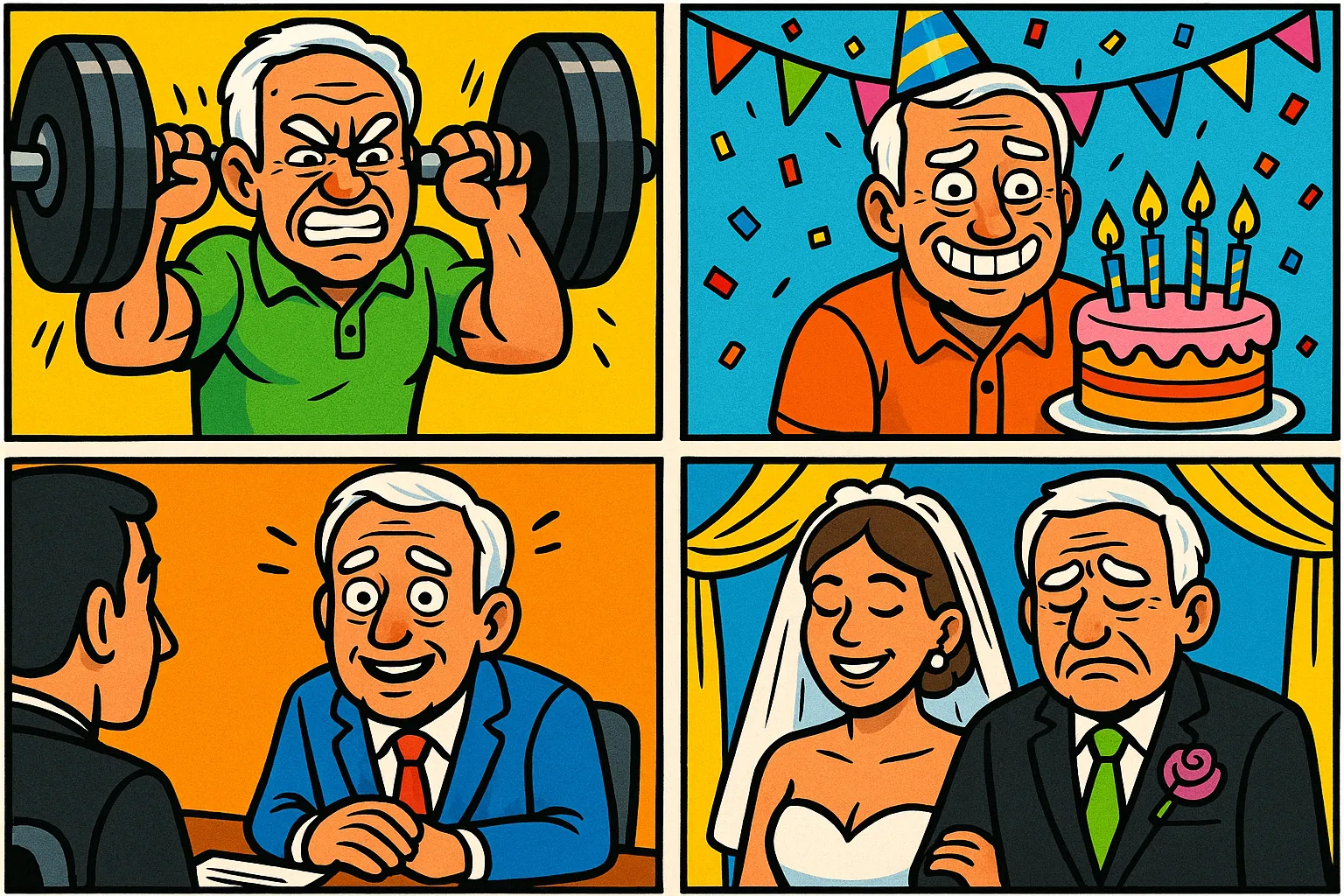
The meme format is beautifully simple. Take any situation where someone would plausibly be smiling through pain, slap Harold's face on it, done. No complex setup needed. No multi-panel storytelling. Just that face. That impossibly relatable, "I'm dying inside but it's fine" face.
Harold's Legacy: More Than Just a Meme
In April 2020, Know Your Meme conducted an in-depth interview with Arató, where he shared detailed insights about his journey from confused stock photo subject to beloved internet icon. By then, he'd fully embraced the Harold persona — attending events, doing interviews, and genuinely enjoying the absurdity of it all.
What makes Arató's story special among meme origins is the arc. Most meme subjects either never find out, find out and hate it, or find out and awkwardly try to monetize it. Arató went through a genuine emotional journey — confusion, discomfort, acceptance, and eventually genuine joy. He didn't just tolerate being a meme. He became good at it.
At its core, Hide the Pain Harold isn't just a reaction image. It's a reminder that everyone — your boss, your neighbor, that cheerful guy at the coffee shop — is probably hiding something behind their smile. And somehow, that's both the saddest and funniest thing on the internet.
😬 Become Harold
Ready to channel your inner suppressed suffering? MEEMES lets you face-swap yourself into the iconic Hide the Pain Harold pose — perfect for when your group chat needs to know you're "totally fine." Because if you're going to hide pain, at least make it funny.
Frequently Asked Questions
Who is Hide the Pain Harold in real life?
Hide the Pain Harold is András Arató, a retired Hungarian electrical engineer from Kőszeg, Hungary. He was born in 1945 and worked as a lighting engineer before accidentally becoming one of the internet's most famous memes through stock photography.
How did András Arató become a stock photo model?
After uploading a vacation photo from Turkey to Facebook, a professional photographer contacted Arató about modeling. They did a trial shoot, both liked the results, and went on to produce hundreds of stock photos together for sites like DreamsTime.
When did Hide the Pain Harold become a meme?
The earliest known meme usage dates to September 2011, when Facepunch forum user Greenen72 posted Harold's stock photos. The meme exploded in 2014 after a 4chan /b/ thread crafted a fictional backstory, and an Imgur compilation got over 880,000 views.
Did Harold embrace being a meme?
Yes! After initially being confused and considering legal action, Arató eventually embraced his meme fame. He gave a TEDx talk in Kyiv in 2018 about his journey, created a homepage for his photos, and regularly meets fans. He's become a beloved internet personality.
Why is Harold's smile so funny?
Harold's expression perfectly captures the universal human experience of pretending everything is fine when it's clearly not. His mouth smiles but his eyes convey deep existential discomfort — a disconnect that's instantly relatable to anyone who's ever said "I'm fine" while dying inside.