Is This a Pigeon?
The Brave Fighter of Sun Fighbird (太陽の勇者ファイバード), Season 1 Episode 3 (1991)
Try This Meme!
Swap your face into the Is This a Pigeon? meme and join the trend.
The Real Story: An Android Who Can't Tell Bugs Apart
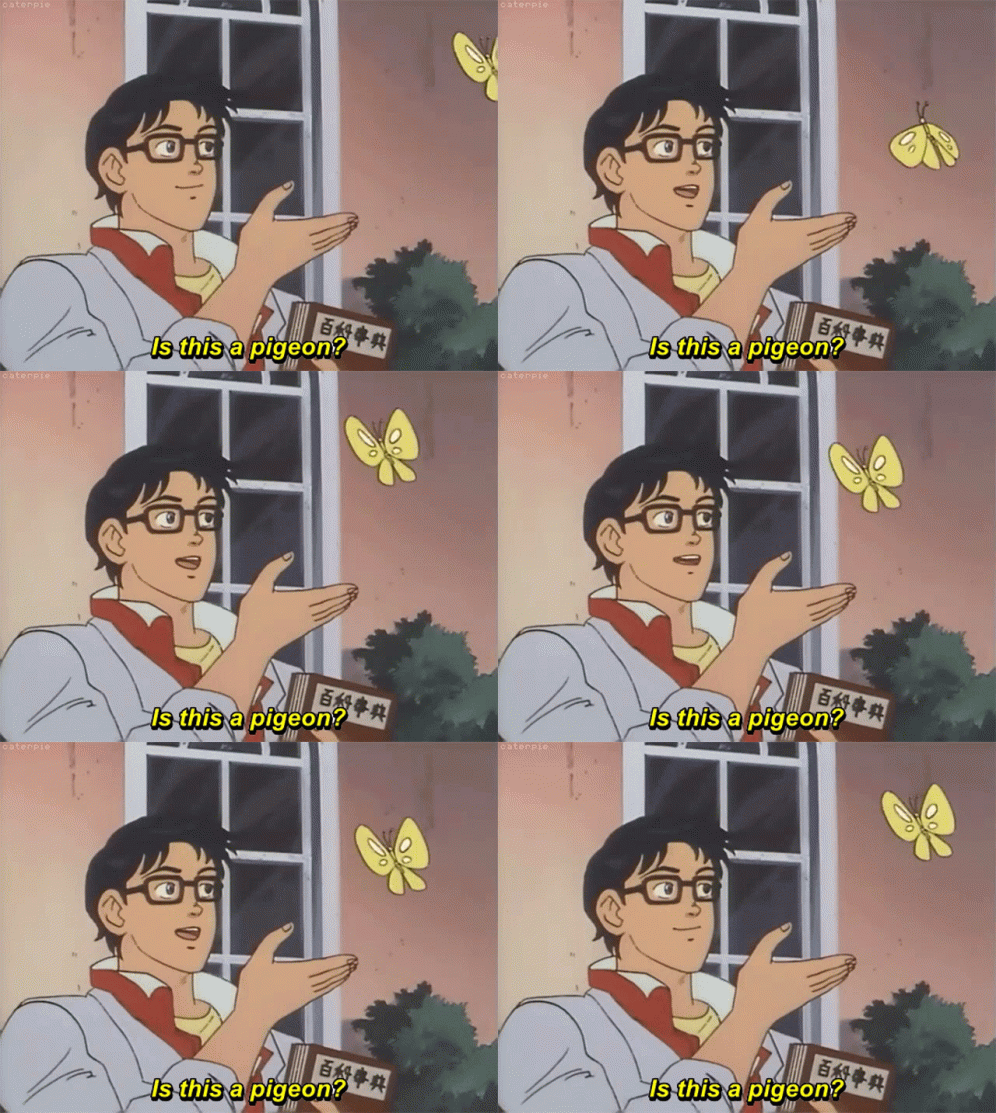
The "Is This a Pigeon?" meme comes from a 1991 Japanese mecha anime called The Brave Fighter of Sun Fighbird (太陽の勇者ファイバード). In Season 1, Episode 3, a character named Yutaro Katori — a humanoid android created by Professor Hiroshi Amano to study Earth — stands in a garden, gestures at a butterfly, and sincerely asks: "Is this a pigeon?" The anime first aired in Japan in February 1991, making this meme's source material over 35 years old.
Katori isn't just bad at entomology. In the same episode, he also confuses Rosaceae (the rose family) with Violaceae (the violet family). The character is an alien intelligence inhabiting an android body, experiencing Earth for the first time. His mistakes aren't translation errors or subtitle failures — they're genuine character moments showing how an otherworldly being struggles with basic earthly categories.
From Obscure Anime to Tumblr Gold (2011)
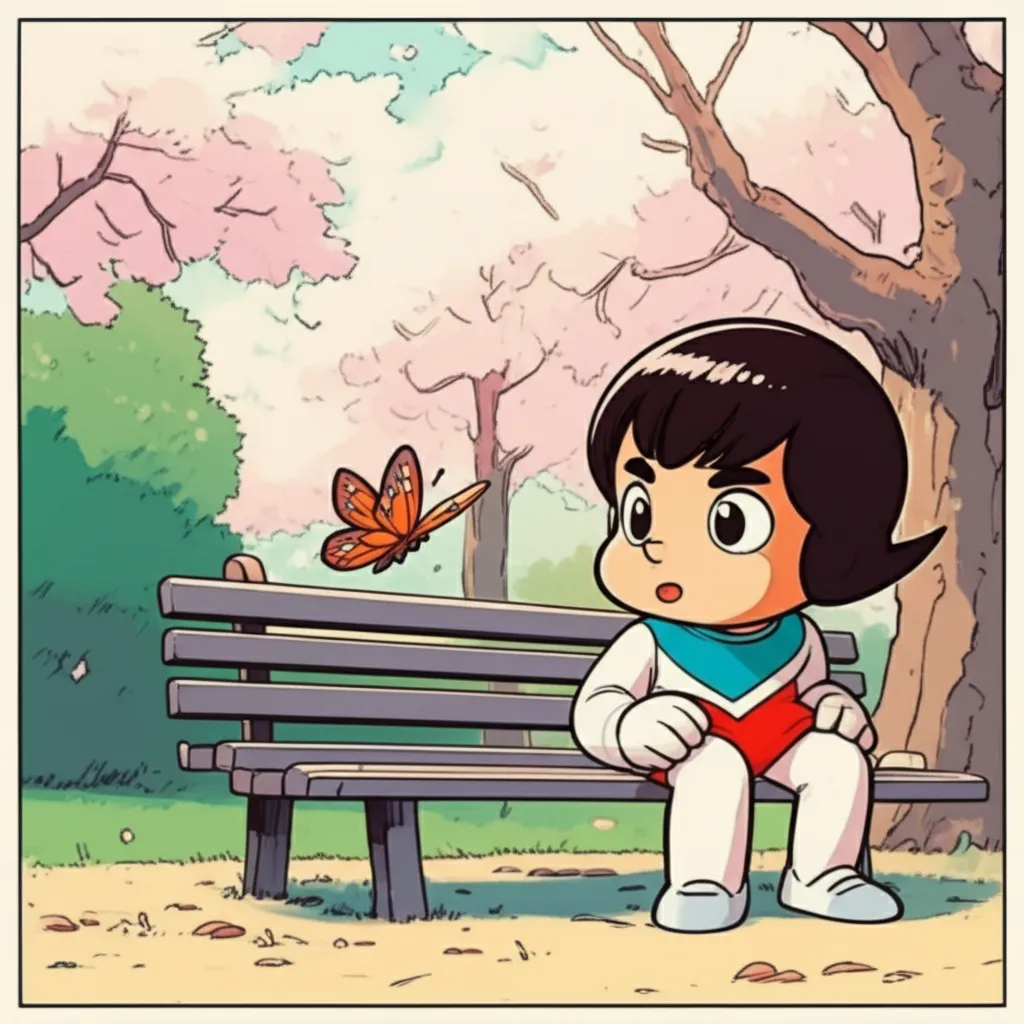
For twenty years, this scene existed in the quiet archives of 90s anime history. Then on December 6th, 2011, a Tumblr user named "Indizi dell'avvenuta catastrofe" uploaded the English-subtitled screenshot. It hit a nerve. The post accumulated over 111,000 notes in just a few years — astronomical numbers for early 2010s Tumblr.
The appeal was immediate and obvious: the combination of the character's utterly confident posture, the delicate butterfly right in front of him, and the absurdly wrong question created a perfect visual metaphor for being wrong with total conviction. It became Tumblr's go-to reaction image for anyone who was spectacularly, cheerfully incorrect about something.

By November 2012, Smosh included it in their "22 Hysterical Anime Screencaps" list, ranked second. In June 2013, BuzzFeed featured it in "27 Subtitles That Have Gone Awesomely Wrong" — notably misattributing the line as a fansub translation error. It wasn't. The subtitle was a perfectly accurate translation. The character is just that clueless.
This misattribution is actually a delicious meta-layer: the internet was doing the exact thing the meme represents. People were confidently pointing at a correct translation and saying "Is this a translation error?" Katori would be proud.
The 2018 Explosion: Object Labeling Changes Everything
For years, the meme simmered as a niche reaction image. Then in late April 2018, someone had the insight that would transform it into a mainstream format: object labeling. Instead of using the image as-is, people started adding text labels to the three elements — the man, the butterfly, and the subtitle — to create entirely new jokes.
On April 26th, 2018, Twitter user @romiosini posted a version labeling the butterfly as "any makeup look without red lipstick." It caught fire. Within days, the format was everywhere.
The moment that truly launched it into the stratosphere came on May 3rd, 2018, when Netflix's official Twitter account posted their own version. They labeled the man as "high school TV dramas," the butterfly as "a 28-year-old," and the subtitle as "Is this a teenager?" The tweet earned 40,400 likes and 9,400 retweets in a single week. When a brand with 8 million followers validates a meme format, it's game over — the format has officially gone mainstream.
Why This Format Is Secretly Genius
Most meme formats have two variables — like Drake approving/disapproving, or a distracted boyfriend looking at one thing over another. The "Is This a Pigeon?" format has three independent label slots: the person (who's confused), the butterfly (the thing being misidentified), and the subtitle (the wrong conclusion). Three variables means exponentially more possible jokes.
But there's something deeper. The format works because it captures a specific, universal human experience: the moment someone confidently categorizes something in a way that reveals they fundamentally don't understand it. We've all watched someone mistake enthusiasm for expertise, or seen a company rebrand a basic feature as "revolutionary AI." Katori isn't just pointing at a butterfly — he's embodying every wrong-with-confidence moment in human history.
The Visual Composition Does Heavy Lifting
The original screencap is compositionally perfect for a meme. Katori's open-palm gesture is universally readable as "presenting" or "indicating." His body language radiates earnest confidence. The butterfly is small, delicate, and obviously not a pigeon. And the subtitle bar at the bottom provides a natural caption area. It's as if the original animators designed the perfect meme template thirty years before memes existed.
The Female Version and Cultural Impact
On June 26th, 2018, at the peak of the meme's resurgence, Twitter user @ImFroppy posted what became the "female version" — a screenshot from the anime You're Under Arrest showing a female character holding pigeons with the fake caption "Is this a butterfly?" The inversion was perfect: same energy, opposite species confusion. It earned 77,300 likes and 35,800 retweets in just 72 hours.
The Daily Dot covered it the next day, and fan artists quickly drew the two characters together. Some commenters joked that it was the same character, just post-transition. Either way, the female version demonstrated something important about the format: its core concept — confidently wrong identification — is universal enough to survive being flipped, remixed, and reimagined endlessly.
The Fansubber Speaks Up
On May 11th, 2018, during the height of the meme's viral resurgence, Kara Dennison — one of the original fansubbers of the Fighbird anime — published a Blogspot post explaining the backstory. She confirmed what die-hard fans already knew: the subtitle was accurate. Katori really does say that in the original Japanese. She also shared behind-the-scenes context about the fansub community's work on this obscure 90s mecha series, giving the meme a rare human origin story.
It's one of the few cases where a meme's original creator (or at least, the person who made the English version possible) got to weigh in while the meme was at peak virality. Most meme origin stories are pieced together after the fact. This one got a primary source.
Swap Your Face Into the Meme
The "Is This a Pigeon?" template is one of the cleanest face-swap targets in the anime meme universe. Katori's face is clearly visible, front-facing, and well-lit — no weird angles or heavy shadows to deal with. The simple composition means your face drops in naturally, instantly turning you into the person who's confidently identifying everything wrong.
Picture it: your face on Katori's body, gesturing at a butterfly with the unshakable conviction that it's a pigeon. Now add your own custom label. "Is this a personality?" pointing at astrology. "Is this retirement planning?" pointing at buying lottery tickets. "Is this a meal?" pointing at a gas station hot dog at 2 AM. The possibilities are limitless.
🦋 Become the Confidently Wrong Guy
MEEMES lets you face-swap directly into the "Is This a Pigeon?" template in seconds. Put your face on Katori, add your own labels, and create the perfect reaction meme for every time someone in your group chat is hilariously wrong about something. No anime knowledge required — just confidence and a butterfly.
Frequently Asked Questions
Where does the "Is This a Pigeon?" meme come from?
The meme originates from a scene in the 1991 Japanese anime "The Brave Fighter of Sun Fighbird." The character Yutaro Katori, a human android, mistakenly identifies a butterfly as a pigeon while studying Earth's nature. The English-subtitled screenshot was first posted to Tumblr in December 2011.
Who is the person in the "Is This a Pigeon?" meme?
The character is Yutaro Katori, a humanoid android created by Professor Hiroshi Amano in the anime series Fighbird. He was built to study Earth but frequently misidentifies basic things — including calling a butterfly a pigeon.
Was the subtitle a translation error?
No. Despite being widely misattributed as a fansub fail (including by BuzzFeed in 2013), the subtitle "Is this a pigeon?" is the accurate, direct translation of the original Japanese dialogue. Katori genuinely mistakes the butterfly for a pigeon in the show.
Why did the meme go viral again in 2018?
In late April 2018, people on Twitter started making "object-labeled" versions where the man, butterfly, and subtitle were relabeled to joke about misidentifying things. Netflix's official account tweeted a version about casting 28-year-olds as high school students, earning 40,400 likes and cementing the 2018 resurgence.
Is there a female version of the "Is This a Pigeon?" meme?
Yes. In June 2018, Twitter user @ImFroppy posted a screenshot from the anime "You're Under Arrest" showing a female character holding pigeons with the caption "Is this a butterfly?" It earned over 77,300 likes and became the official gender-swapped counterpart.
Can I face-swap myself into the "Is This a Pigeon?" meme?
Absolutely. The meme's clear single-character composition makes it one of the easiest anime memes to face-swap. MEEMES lets you drop your face onto Katori's body in seconds — pointing at whatever "butterfly" you want to hilariously misidentify.